Is Tor Safe to Use? A Beginner-Friendly Explanation for Accessing Aurum
If you are new to crypto, digital assets, or platforms like Aurum, you may have heard someone mention using Tor Browser.
And for a lot of people, that immediately creates confusion.
They hear “Tor” and think:
Is that the dark web?
Is it illegal?
Is it dangerous?
Why would I need a different browser?
Am I doing something wrong by using it?
Those are fair questions.
So let’s slow down and explain this in plain English.
What Is Tor?
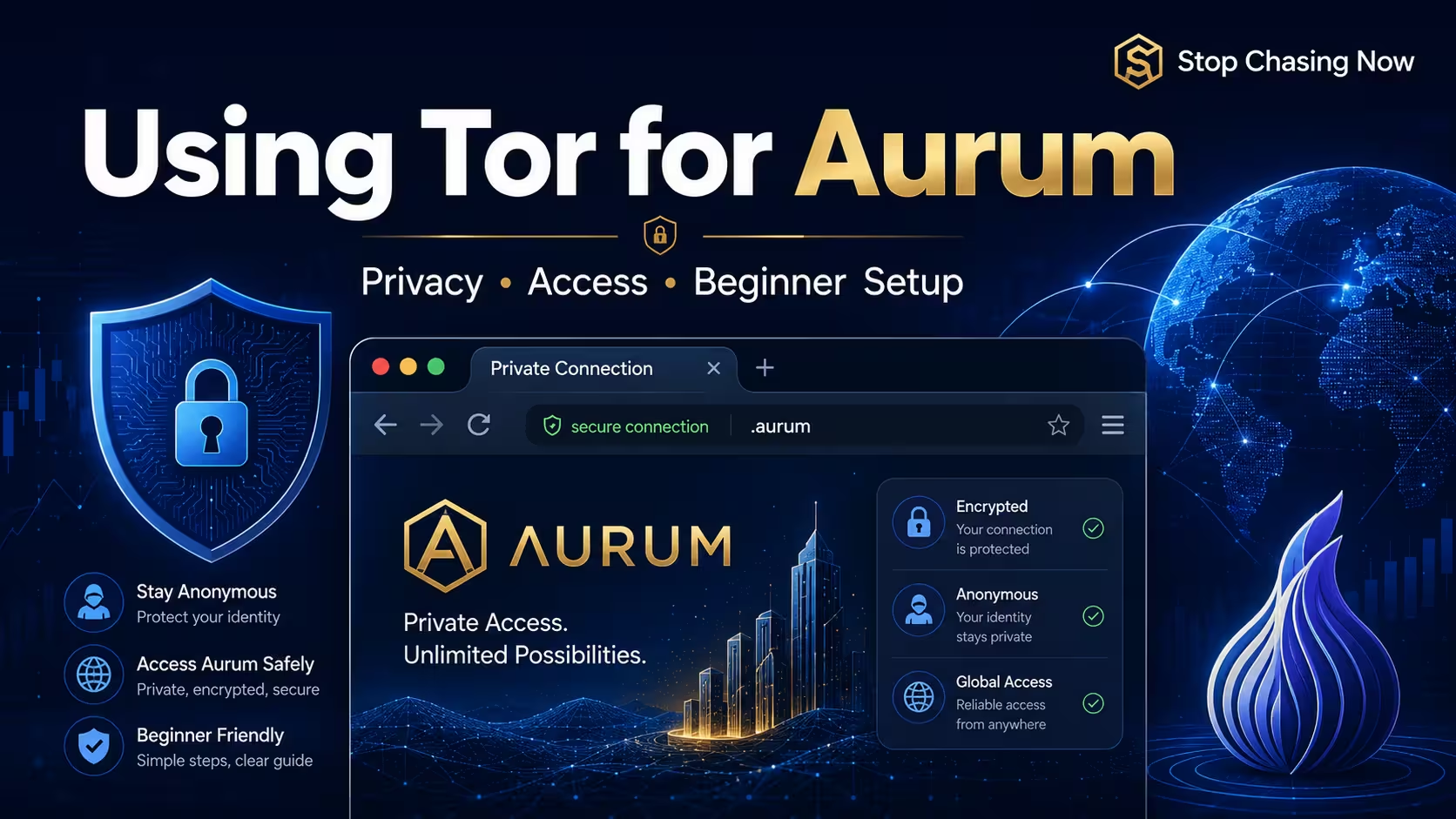
Tor is a privacy-focused web browser.
Think of it like Chrome, Firefox, Safari, or Edge — except Tor is designed to give users more privacy and make it harder for websites, advertisers, internet providers, and other outside parties to track normal browsing activity.
That is the simple version.
Tor is not automatically “the dark web.”
Tor is a browser and a privacy network.
Like any tool, it can be used responsibly or irresponsibly. The tool itself is not the issue. What matters is how people use it.
For our purposes, the reason Tor comes up is simple:
Some people, especially in certain regions, may have trouble accessing specific websites through a normal browser. Tor can sometimes help people access websites more privately and with fewer location-based connection issues.
Why Do Some People Use Tor for Aurum?
Aurum is a digital asset and AI-powered finance platform.
Depending on where someone is located, what internet provider they use, or how certain websites are routed, some users may have issues accessing the platform normally.
That does not automatically mean something is wrong.
Sometimes websites, networks, browsers, internet providers, regions, or security filters can create access problems.
Tor can be one option people use to access a site more privately.
It is not because Tor is “black web” or because someone is doing something shady.
It is simply another browser designed around privacy and access.
Is Tor Legal?
In many places, using Tor Browser itself is legal.
It is used by journalists, researchers, privacy advocates, businesses, travelers, and everyday people who want more privacy online.
However, laws and regulations vary by country and region.
You are responsible for understanding and following the laws where you live. You are also responsible for following any platform terms, rules, and restrictions that apply to you.
This post is not legal advice.
It is only a beginner-friendly explanation of what Tor is, why some people use it, and how to think about it responsibly.
Is Tor the Same Thing as the Dark Web?
No.
This is one of the biggest misunderstandings.
Tor can be used to access regular websites, just like any other browser.
It can also access special “.onion” websites that only work through the Tor network.
Because some people associate .onion sites with the dark web, they assume Tor itself is dangerous. That is like saying a car is bad because some people drive irresponsibly.
The browser is just a tool.
You do not need to browse random unknown sites. You do not need to explore anything strange. You do not need to click unknown links.
If you are using Tor to visit a specific official website, treat it the same way you would treat any other browser:
Only use the correct link.
Do not click random links.
Do not download unknown files.
Do not share sensitive information unless you know exactly where you are.
Always double-check website addresses.
How to Use Tor Responsibly
If you decide to use Tor Browser, keep it simple.
Only download it from the official Tor Project website.
Do not download fake “Tor” apps, browser extensions, or random versions from third-party sites.
Once installed, use it only for the site you are trying to reach.
Do not assume Tor makes you invincible online.
It does not.
Tor can improve privacy, but it does not remove all risk. You still need common sense.
That means:
Use official links only.
Avoid unknown websites.
Do not download files from random sources.
Do not enter sensitive information on suspicious pages.
Do not share wallet seed phrases.
Do not share private keys.
Do not let anyone remote into your computer.
Do not send crypto until you fully understand the asset, network, and address.
Tor is a privacy tool.
It is not a replacement for good judgment.
Common Beginner Questions About Tor
“Do I need Tor to use Aurum?”
Not everyone will need it.
Some people can access the platform through a normal browser. Others may need a different browser, Tor, or another access method depending on their location or connection.
If your normal browser works, great.
If it does not, Tor may be one option to try.
“Is Tor only for hackers?”
No.
Tor is used by many different types of people for privacy, research, communication, and access.
The average person using Tor to visit a specific website is not doing anything advanced or complicated.
“Will Tor protect my crypto?”
No.
Tor is a browser.
It does not protect you from sending funds to the wrong address. It does not protect you from choosing the wrong network. It does not protect you from fake websites. It does not protect you from scams if you ignore common sense.
Your crypto safety still depends on your decisions.
“Can I use Tor on mobile?”
Tor Browser is available on some devices, but many people find desktop easier for setup.
If you are brand new, using a laptop or desktop computer may make the process less confusing.
“Should I use Tor for everything?”
Not necessarily.
For many people, Tor is best used as a specific tool for specific situations.
You do not need to replace your normal browser for everyday browsing unless you have a privacy reason to do so.
The Bigger Lesson: Do Not Let Tech Confusion Stop You
A lot of people stop before they start because one small technical step feels intimidating.
Crypto wallet setup feels confusing.
Stablecoins feel confusing.
Networks like ERC20, TRC20, BEP20, and Polygon feel confusing.
Tor feels confusing.
But most of the time, these things are learnable once someone explains them simply.
That is one of the reasons we built Stop Chasing Now around education and onboarding.
Aurum provides the platform.
We help people understand the process.
That includes beginner-friendly guidance around:
Creating an account
Understanding the platform
Learning the basic setup flow
Understanding funding options
Learning stablecoin basics
Avoiding common setup mistakes
Knowing when to slow down and ask questions
We are not financial advisors, and we do not provide legal, tax, or investment advice.
But we do help people understand the steps more clearly so they are not guessing.
Important Safety Reminders
Before using Aurum, Tor, crypto wallets, stablecoins, or any digital asset platform, keep these reminders in mind:
Never use money you cannot afford to lose.
Never rush a crypto transaction.
Always verify the official website link.
Always verify the correct asset and network.
Never share seed phrases or private keys.
Never trust random DMs offering “support.”
Do your own research before creating an account, funding, or participating in any opportunity.
Digital assets carry risk.
AI-powered trading tools carry risk.
Affiliate opportunities require effort and are not guaranteed.
The goal is not to rush.
The goal is to understand.
Final Thought
Tor is not something to be afraid of.
It is also not something to use carelessly.
It is simply a privacy-focused browser that some people may use when accessing certain websites, especially if their normal browser or location creates access issues.
If you are new, the most important thing is not to panic or assume the worst.
Slow down.
Use official links.
Ask questions.
Understand the steps.
And never move money until you are confident you understand what you are doing.
When you join through us, you get more than just access to the platform — you get onboarding help, setup guidance, our marketing funnel, AI follow-up tools, live chat/voice support, and a team to help you avoid common mistakes.
Start with education. Understand the risks. Then make your own informed decision.