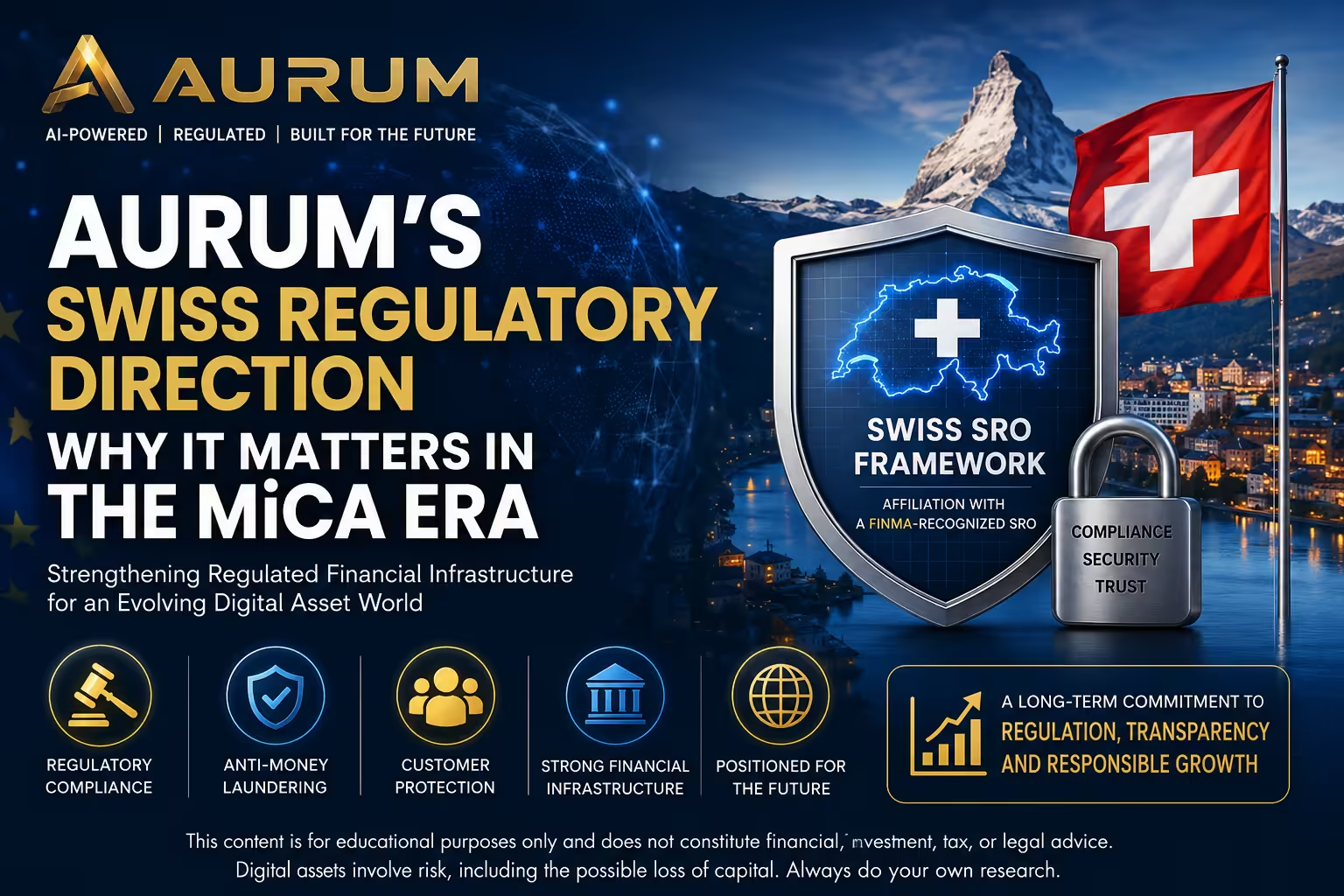
AURUM’s Swiss Regulatory Direction: Why It Matters in the MiCA Era
Regulation is no longer a side issue in the digital-asset industry.
It is becoming part of the product.
A recent update from the AURUM Official English Channel discussed the company’s move toward establishing regulated financial infrastructure through Switzerland. The announcement connected that direction to a Crypto.news article examining how Europe’s Markets in Crypto-Assets Regulation—better known as MiCA—is forcing crypto companies to rethink where and how they operate.
The important story is not simply that another article has appeared.
It is what this regulatory shift could mean for the future AURUM is attempting to build.
MiCA Is Changing the Rules in Europe
MiCA created a harmonized European framework covering crypto-assets, issuers and many crypto-related services that previously operated under different national rules.
The framework introduces requirements involving authorization, governance, disclosures, operational controls, consumer protection and anti-money-laundering compliance. It is intended to make the market more orderly while allowing authorized providers to operate across participating European markets. Readers can review the framework through the European Securities and Markets Authority.
For crypto companies, that means regulation can no longer be treated as something to address later.
A company may have innovative technology, a growing community and useful products, but it still needs a legally sustainable structure for delivering those products in the markets it serves.
The recent Crypto.news article describes how some businesses have obtained MiCA authorization, while others have reduced services, restructured or considered regulatory frameworks outside the European Union. Switzerland’s self-regulatory system is presented as one potential route for companies developing certain digital-asset and financial-intermediary services.
What Does a Swiss SRO Affiliation Mean?
The term “SRO” stands for self-regulatory organization.
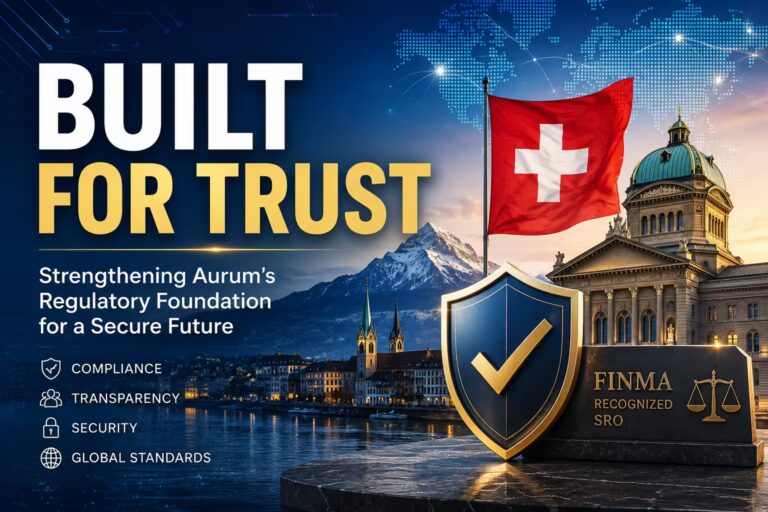
Under Switzerland’s Anti-Money Laundering Act, certain professional financial intermediaries must affiliate with an SRO recognized by the Swiss Financial Market Supervisory Authority, FINMA.
The SRO establishes detailed compliance requirements for its members and monitors whether they are meeting their obligations. These can include identifying customers and beneficial owners, performing appropriate due diligence and reporting suspected money laundering. FINMA recognizes and supervises the SRO itself, while the SRO supervises its affiliated financial intermediaries. More detail is available on FINMA’s official SRO page.
That distinction matters.
SRO membership is not the same thing as receiving a Swiss banking license. It is also not automatically equivalent to MiCA authorization or permission to offer every financial service in every jurisdiction.
It can, however, provide a regulated anti-money-laundering foundation for defined financial-intermediary activities when the correct legal entity, services and compliance systems are in place.
Why This Direction Could Matter for AURUM
AURUM is developing more than one isolated crypto product.
Its publicly described ecosystem includes AI-driven trading tools, Neyro’s non-custodial trading technology, an exchange, cards, payment infrastructure and neobanking-related services. These products interact with different parts of the digital-finance landscape, making regulatory structure increasingly important as the ecosystem expands. Readers can explore the company’s current public positioning on the AURUM Foundation website.
According to the official Telegram update, AURUM is working toward strengthening its regulated financial infrastructure through Switzerland.
If completed and publicly confirmed, affiliation with a FINMA-recognized SRO could support areas such as:
- Anti-money-laundering and customer-verification procedures
- Certain payment and digital-asset intermediary activities
- Over-the-counter transaction infrastructure
- More clearly defined operational and compliance responsibilities
The significance is not that regulation removes risk.
It does not.
The significance is that AURUM appears to be treating compliance as part of its long-term infrastructure rather than as a marketing label added after the products are built.
That is the more meaningful signal.
The Neyro Connection
There is an important detail readers should understand about the linked media coverage.
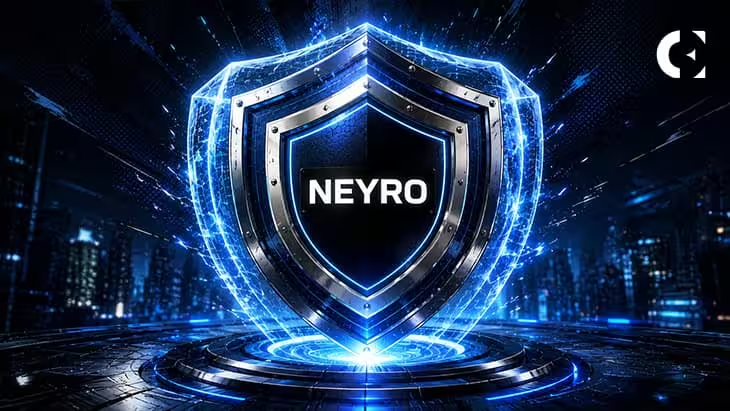
The Crypto.news article currently identifies Neyro as an example of a project moving toward the Swiss SRO framework. It does not name AURUM directly in the article text.
However, AURUM’s website presents Neyro as part of the AURUM ecosystem and describes it as a non-custodial AI-agent layer for trading. The same website states that Aurum Foundation LTD operates under NEYRO.
That provides context for why AURUM’s official channel connected the article to its broader regulatory strategy.
Still, accuracy matters. The responsible way to describe the coverage is that the article discusses Neyro and the Swiss SRO route within a wider examination of MiCA—not that Crypto.news independently confirmed AURUM’s completed regulatory status.
Media Attention Is Context, Not Regulatory Proof
The Crypto.news story has also appeared through MEXC News and CoinFi, extending its reach across several industry platforms.
That attention can help more people understand the regulatory pressures facing crypto companies.
It should not, however, be confused with regulatory approval or an independent guarantee about a platform.
Crypto.news discloses that the article was provided by a third party, does not represent an endorsement and should not replace the reader’s own research.
Media visibility can provide useful context.
Formal documentation provides verification.
Responsible research requires understanding the difference.
What Should Members Watch for Next?
As AURUM’s Swiss strategy develops, the most useful future updates would identify the exact legal entity involved, the FINMA-recognized SRO it is joining and the specific activities covered by the affiliation.
Members should also look for public confirmation through the relevant SRO or FINMA’s SRO member-search system after the process is complete. FINMA provides that search so the public can check whether a financial intermediary is affiliated with a recognized organization.
Other important questions include:
- Which AURUM or Neyro services will operate through the Swiss structure?
- Which countries will those services support?
- What customer-verification requirements will apply?
- Does the structure cover payments, exchange services, OTC activity or another defined scope?
- What separate authorizations may still be needed in Europe or other jurisdictions?
These are not negative questions.
They are the questions a serious company should be prepared to answer—and the questions an informed user should be willing to ask.
Regulation Does Not Eliminate Risk
A stronger compliance framework may improve accountability and provide clearer operating standards.
It does not guarantee investment performance.
It does not remove market volatility.
It does not prove that every product will succeed.
Digital assets, automated trading tools and emerging financial technologies continue to involve risk, including the possible loss of capital. Even regulated markets remain exposed to uncertainty and volatility.
That is why Stop Chasing Now believes education should come before action.
People deserve clear explanations of what has been announced, what has been verified and what remains in development. They should never be pressured to make a financial decision because of a headline, regulatory application or media mention.
The Bigger Picture
The end of MiCA’s transitional phase is forcing the digital-asset industry to mature.
Some companies will leave certain markets.
Some will pursue full European authorization.
Others will establish regulated structures in jurisdictions such as Switzerland while carefully defining where their services can legally be offered.
AURUM’s stated Swiss direction appears to be part of that larger transition.
It does not prove the final outcome, and the affiliation process should be verified when complete. But it does suggest that the company understands an important reality:
The next generation of digital finance will not be built through technology alone.
It will require technology, compliance, transparency and the ability to operate responsibly across changing regulatory environments.
For people following AURUM, that makes this a development worth watching—not because a headline guarantees the future, but because regulatory infrastructure may help determine which ecosystems are prepared to participate in it.
Disclaimer: This article is for education and general information only. It is not financial, investment, tax or legal advice. Digital assets and automated trading tools involve risk, including the possible loss of capital. Regulatory applications and pending affiliations should not be treated as completed approvals. Always conduct your own research and never risk money you cannot afford to lose.