Microsoft, Xbox Layoffs, and the Bigger Lesson About AI, Jobs, and the Future of Income
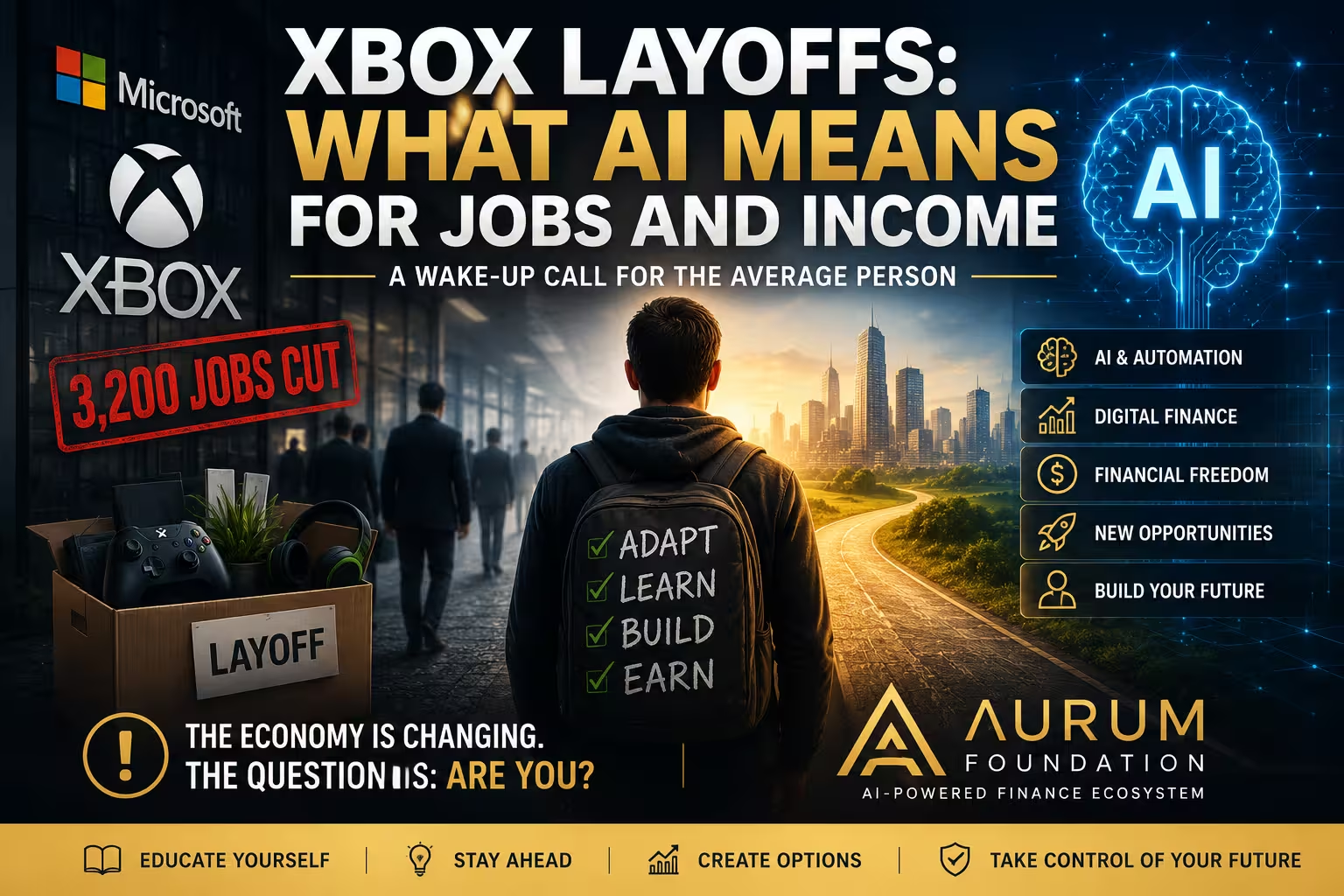
When most people see a headline like “Microsoft’s Xbox to Cut 3,200 Jobs”, they usually focus on the obvious part:
People are losing jobs.
And that is real. It matters. Every job cut represents real families, real bills, real uncertainty, and real people being forced to adjust.
But there is a bigger lesson underneath the headline.
This is not just a gaming story.
It is not just an Xbox story.
It is not even just a Microsoft story.
It is a sign of where the economy is moving.
And for the average person, it should be a wake-up call.
The Real Story Is Not Layoffs — It Is Reallocation
According to the video transcript, companies across the technology industry are rethinking where they are spending money. A major reason is that they are spending heavily on AI, data centers, infrastructure, chips, and the systems needed to compete in the next era of technology.
That word matters:
Reallocation.
Money is not disappearing.
Capital is being moved.
Companies are looking at older divisions, lower-margin businesses, and less profitable operations and asking a very serious question:
Does this still fit where the world is going?
If the answer is no, those areas get trimmed, sold, merged, automated, or restructured.
That may sound cold, but it is how business works.
Companies do not stay the same forever. They move toward growth, margins, efficiency, and future demand.
Right now, a lot of that future demand is pointing toward AI.
AI Is Not Coming — It Is Already Reshaping Budgets
A lot of people still talk about AI like it is some future event.
It is not.
AI is already changing how major companies spend money.
AI is already changing what roles are valuable.
AI is already changing what skills matter.
AI is already forcing companies to decide what they want to own, what they want to automate, what they want to outsource, and what they no longer want to carry.
In the Xbox example, the video discusses Microsoft looking closely at margins, profitability, content ownership, platform strategy, and the cost of components like memory and chips. It also points out that large AI infrastructure spending is causing companies to make harder decisions across divisions.
That is the key.
AI is not just creating new tools.
It is changing financial priorities.
And when financial priorities change at the corporate level, jobs change at the individual level.
The Average Person Needs to Pay Attention
This is where the conversation becomes personal.
Most people are taught to think about income in one way:
Get a job.
Work hard.
Hope the company keeps growing.
Hope the department survives.
Hope the economy stays stable.
Hope retirement works out later.
But hope is not a strategy.
The modern economy is becoming more automated, more digital, more AI-driven, and more competitive.
That does not mean everyone should panic.
It does mean people should become more aware.
If billion-dollar companies are repositioning themselves for the AI economy, the average person should probably be asking:
How am I positioning myself?
Not emotionally.
Not fearfully.
Strategically.
Job Security Is Changing
There was a time when getting hired by a major company felt like security.
For many people, a big company job meant stability, benefits, career growth, and a predictable path.
But in today’s economy, even major companies restructure.
Even profitable companies cut jobs.
Even strong brands reduce staff.
Even divisions with revenue can be questioned if margins are not strong enough.
That is a powerful lesson.
Revenue alone is not enough.
Activity alone is not enough.
Being attached to a big name is not always enough.
Companies care about profitability, growth, scalability, and where the future is going.
Individuals should care about the same things in their own financial lives.
The New Question: Are You Building Around the Future or the Past?
This is the mindset shift.
The average person does not need to become a tech executive.
They do not need to become an AI engineer overnight.
They do not need to understand every detail of data centers, chips, machine learning, or blockchain.
But they do need to understand that the world is changing.
And they need to stop ignoring the direction money is moving.
Capital is flowing into:
AI infrastructure
Automation
Digital finance
Data centers
Blockchain technology
Web3 tools
Financial platforms
Digital assets
Decentralized systems
AI-powered productivity
That does not mean every opportunity in those sectors is good.
It does not mean everything connected to AI or crypto is safe.
It definitely does not mean people should blindly jump into something because it sounds futuristic.
But it does mean these areas deserve attention.
Because when industries change, people who learn early often have more options than people who wait until the change is obvious.
This Is Why People Should Look Closer at Programs Like Aurum
This is one reason I believe the average person should take a closer look at platforms like Aurum Foundation.
Not because Aurum is a magic answer.
Not because anything is guaranteed.
Not because AI finance removes risk.
It does not.
But because Aurum sits in the middle of several major trends that are already reshaping the economy:
AI-powered financial tools
Digital asset utility
Trading automation
Web3 infrastructure
Financial technology
Alternative income education
Affiliate-based opportunity
Global digital finance
For someone willing to learn, that matters.
Aurum gives people a reason to start understanding the language of the new economy.
Stablecoins.
Digital wallets.
AI trading tools.
Crypto utility.
Non-traditional finance.
Platform ecosystems.
Risk management.
Online income models.
These are not fringe topics anymore.
They are becoming part of the financial conversation.
The Goal Is Not to Quit Your Job Tomorrow
This is important.
The takeaway from layoffs is not, “Everyone should quit their job and jump into AI finance.”
That would be irresponsible.
The real takeaway is:
Do not depend on one income source forever without learning what is changing around you.
Aurum should be approached with education, patience, and personal responsibility.
People should ask questions.
They should understand the platform.
They should understand the risks.
They should never use money they cannot afford to risk.
They should not believe unrealistic income claims.
They should treat this like learning a new financial ecosystem, not buying a lottery ticket.
That is the right mindset.
The People Who Adapt Usually Win
Every major shift creates discomfort.
The internet did.
Smartphones did.
Social media did.
E-commerce did.
Streaming did.
Now AI is doing it.
Some people will complain about the change.
Some people will ignore it.
Some people will wait until they are forced to respond.
And some people will start learning now.
The people who adapt early do not always win because they are smarter.
They win because they are paying attention.
They see the direction things are moving.
They build new skills.
They explore new tools.
They ask better questions.
They start creating options before they need them.
That is the real lesson.
What Microsoft’s Xbox Overhaul Should Teach Us
The Xbox news is not something to celebrate.
Job losses are serious.
But it is something to learn from.
If a company as large as Microsoft is willing to make painful decisions in order to focus on margins, AI infrastructure, data centers, and long-term growth, then regular people should be willing to make smaller, smarter decisions in their own lives too.
That may mean learning a new skill.
Starting a side income.
Understanding AI tools.
Learning about digital finance.
Building an online audience.
Exploring platforms like Aurum.
Reducing dependence on one paycheck.
Taking personal financial education more seriously.
The point is not fear.
The point is preparation.
The Old Economy Is Not Disappearing Overnight
Jobs will still exist.
Traditional businesses will still operate.
People will still need services, products, leadership, creativity, relationships, and human judgment.
But the structure of work is changing.
The structure of income is changing.
The structure of opportunity is changing.
And pretending nothing is happening is not a strategy.
The average person does not need to be ahead of everyone.
They just need to stop being asleep.
Final Thoughts
The Microsoft and Xbox restructuring is another reminder that the AI economy is not some distant idea.
It is already influencing corporate decisions.
It is already changing budgets.
It is already affecting jobs.
It is already shifting where companies place their long-term bets.
The question is not whether change is coming.
The question is whether you are paying attention.
Programs like Aurum Foundation are worth studying because they sit at the intersection of AI, finance, digital assets, automation, and online opportunity.
That does not make them risk-free.
It makes them relevant.
And in a world where the biggest companies are reorganizing around the future, the average person should at least be curious enough to learn what that future may look like.
Because the people who wait for certainty usually show up late.
The people who start learning early give themselves options.