Risk vs. Uncertainty: Why Smart Investors Know the Difference
Most people use the words risk and uncertainty like they mean the same thing.
They do not.
And in finance, investing, crypto, AI, business, or entrepreneurship, confusing the two can be very expensive.
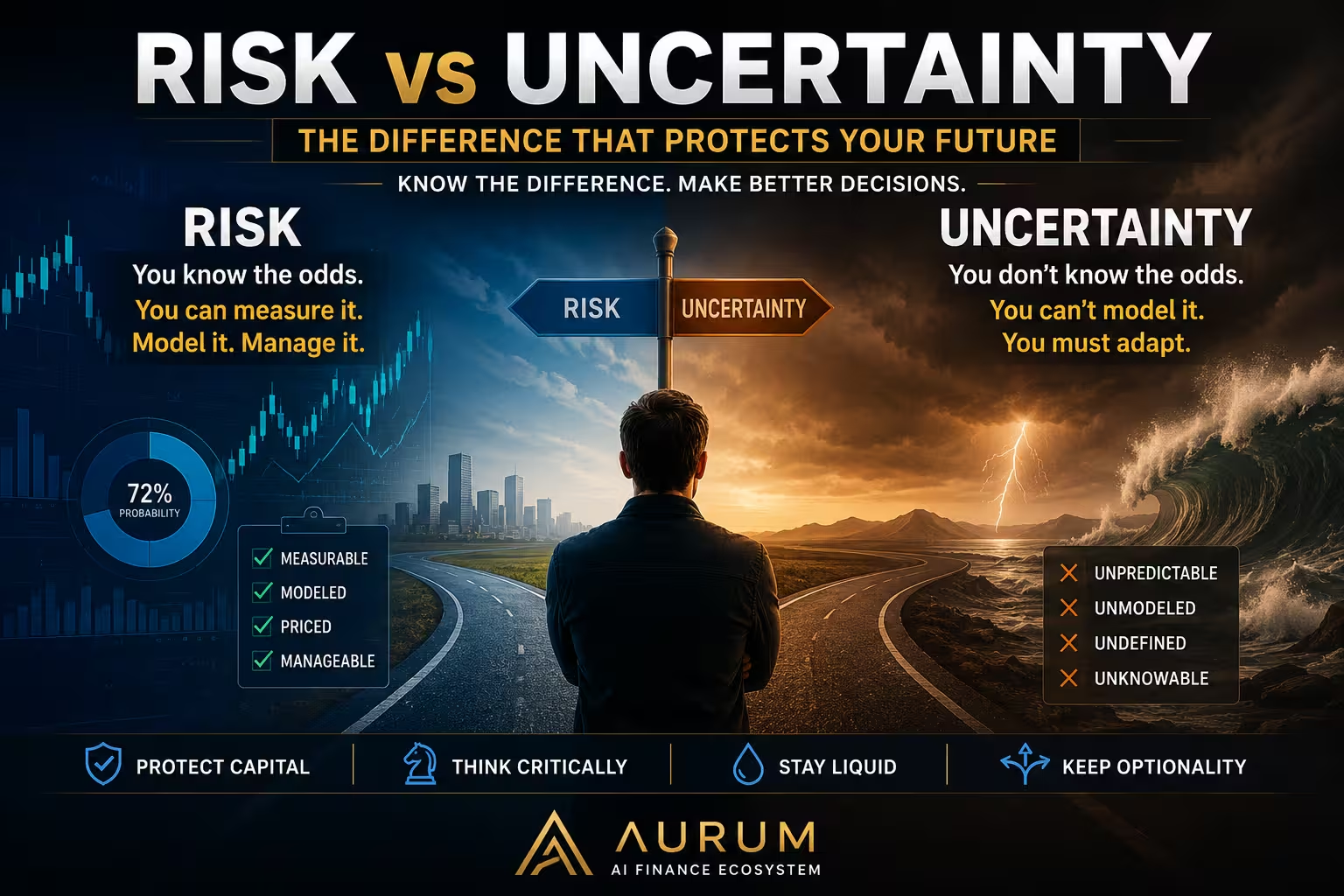
A recent Telegram post made this point perfectly. Risk is when you do not know the outcome, but you do know the odds. Uncertainty is when you do not know the outcome and you do not truly know the odds either.
That difference matters.
Because risk can often be measured.
Uncertainty has to be respected.
Risk Can Be Measured
Risk is uncomfortable, but it can often be managed.
A trader entering a position may not know whether the trade will win or lose, but they can usually define the downside. They can size the position. They can use a stop loss. They can calculate a risk-to-reward ratio. They can decide ahead of time how much capital they are willing to expose.
That is risk.
An insurance company does not know whether one specific person will file a claim next year, but it can use actuarial data, historical patterns, and probability models to price policies across a large group of people.
That is risk.
A business owner may not know whether a new ad campaign will be profitable, but they can test with a small budget, measure conversions, and scale based on data.
That is risk.
Risk does not mean safe. It does not mean guaranteed. It simply means the variables are defined enough that you can make a calculated decision.
You may still be wrong.
But at least you know what game you are playing.
Uncertainty Is Different
Uncertainty is when the variables are not fully known.
It is when the odds cannot be accurately calculated because the environment itself is changing.
A sudden regulatory shift.
A geopolitical event that shakes global markets.
A new technology that rewrites an entire industry.
A banking crisis.
A black swan event.
An unexpected policy change.
An AI breakthrough that changes how financial systems operate.
That is uncertainty.
The problem is that many people try to treat uncertainty like risk. They build models. They assign probabilities. They plug numbers into spreadsheets. Then they trust the output as if the world is more predictable than it really is.
That can be dangerous.
Because a model is only as good as the assumptions behind it.
And when the assumptions are incomplete, the model can give people false confidence.
Why This Matters in AI Finance and Digital Assets
This lesson is especially important in the world of AI finance, Web3, and digital assets.
There is incredible innovation happening right now. Artificial intelligence is changing how data is analyzed. Automated trading tools are becoming more advanced. Blockchain infrastructure continues to evolve. Platforms like Aurum Foundation are part of a bigger movement toward AI-powered financial tools and digital asset utility.
That is exciting.
But exciting does not mean risk-free.
Any emerging financial technology space comes with both risk and uncertainty.
The risk may involve market volatility, product performance, platform decisions, liquidity, fees, personal strategy, or how much capital someone chooses to allocate.
Those are things a person can often think through, size responsibly, and manage.
But uncertainty is broader.
Regulation can change. Market conditions can shift. Technology can evolve. Adoption can accelerate or slow down. Competitors can appear. Entire narratives can change almost overnight.
That is why education matters so much.
The goal is not to pretend uncertainty does not exist.
The goal is to build with enough awareness that you are not caught off guard when conditions change.
Most Tools Are Built for Risk, Not Uncertainty
Traditional risk management tools work best in stable environments.
They are useful when market behavior falls within expected ranges. They help people measure position size, expected return, volatility, drawdown, and exposure.
But the biggest moments in markets often come when something happens outside the model.
That is where uncertainty shows up.
And when uncertainty appears, the smartest people are often not the ones with the most complicated spreadsheets.
They are the ones who know when to step back, reduce exposure, stay liquid, and avoid overconfidence.
That is a powerful lesson.
Because sometimes the best decision is not to push harder.
Sometimes the best decision is to preserve optionality.
Optionality Over Blind Conviction
One of the strongest ideas from the Telegram post was this:
In uncertainty, what works is different.
Smaller positions.
Optionality over conviction.
Staying liquid when everyone else is fully deployed.
Knowing what you do not know.
That mindset is extremely valuable.
Conviction can be powerful, but blind conviction can become dangerous. When someone becomes too certain, they may ignore warning signs. They may overexpose themselves. They may treat assumptions as facts.
Optionality is different.
Optionality means keeping yourself in the game.
It means having choices.
It means not putting yourself in a position where one unexpected event can wipe you out emotionally, financially, or strategically.
This applies to investing.
It applies to business.
It applies to marketing.
It applies to crypto.
It applies to AI finance.
And it applies to anyone evaluating a new opportunity.
How This Applies to Aurum Foundation
Aurum Foundation is part of an emerging financial technology ecosystem centered around AI-powered tools, digital assets, trading technology, and financial utility.
For many people, that creates curiosity.
For others, it creates skepticism.
Both responses are understandable.
The right approach is not hype. The right approach is education.
Anyone looking at Aurum should be asking good questions:
How does the platform work?
What tools are available?
What are the risks?
What parts are proven and what parts are still developing?
How much am I comfortable allocating?
What would happen if market conditions changed?
Am I making an informed decision or an emotional one?
That is how serious people evaluate opportunities.
Aurum may offer access to innovative AI-powered financial tools, but no platform removes personal responsibility. No platform eliminates risk. No platform can guarantee future outcomes.
The key is to approach it with a clear mind, realistic expectations, and a long-term perspective.
The Real Lesson
The best investors and entrepreneurs are not always the ones who make the boldest predictions.
They are often the ones who know when predictions are not enough.
They understand the difference between what can be measured and what cannot.
They respect risk.
They prepare for uncertainty.
They do not confuse confidence with certainty.
That is a mindset worth developing.
Because in a world being reshaped by AI, crypto, automation, regulation, and global financial change, the people who survive and thrive will not simply be the ones with the best models.
They will be the ones who know when to use the model — and when to put it away.
Final Thoughts
Risk and uncertainty are not the same thing.
Risk can often be calculated.
Uncertainty must be respected.
That distinction can change how you invest, how you build, how you evaluate opportunities, and how you protect yourself from emotional decisions.
In AI finance, this mindset is critical.
There may be powerful opportunities ahead, especially as platforms like Aurum Foundation continue building tools around automation, digital assets, and financial technology. But the smart approach is not to chase blindly.
The smart approach is to learn, ask questions, manage exposure, stay flexible, and make decisions based on understanding — not hype.
Because the goal is not just to find opportunity.
The goal is to stay in the game long enough to benefit from it.