Bryan Benson on MiCA, Binance, and Why Regulation Can Separate Builders From Pretenders
Every time a major regulatory framework lands, the crypto industry tends to split into two camps.
One side sees regulation as an attack.
The other side sees it as infrastructure.
Bryan Benson made an important point in a recent community update that deserves more attention, especially for anyone following Aurum, Neyro, MiCA, AI finance, and the broader digital asset space.
His message was simple but powerful:
Regulation creates work.
Regulation creates pressure.
Regulation may force some products to change.
Regulation may even push weaker projects out.
But for serious builders, regulation can also clear the road.
That is the part many people miss.
The Crypto Industry Is Growing Up
For years, crypto operated in a world filled with speed, speculation, innovation, confusion, hype, and uncertainty.
Some projects were real.
Some were not.
Some teams were building infrastructure.
Others were chasing attention.
Some platforms were thinking long term.
Others were only trying to survive the next marketing cycle.
When a market is young and regulation is unclear, everything can look bigger than it really is.
Weak projects can hide in the noise.
Unclear rules can make unprepared companies look like innovators.
Ambiguity can attract attention, but it does not always attract serious capital.
That is why regulation changes the game.
When frameworks like MiCA arrive, the industry is forced to mature.
Companies have to answer harder questions.
Can they comply?
Can they adapt?
Can they restructure?
Can they communicate?
Can they survive scrutiny?
Can they build something that institutions can actually take seriously?
That is where the separation begins.
Bryan Benson’s Binance Example
One of the most interesting parts of Bryan Benson’s message was his reference to his time building Binance’s presence in Latin America.
He explained that he saw a similar process play out there.
Countries that moved to regulate early, even imperfectly, eventually developed stronger local crypto ecosystems than countries that kept everything in a grey zone.
That is an important lesson.
People often assume regulation automatically kills innovation.
But that is not always true.
Bad regulation can hurt innovation.
Overreach can hurt innovation.
Confusion can hurt innovation.
But clear rules can also give serious companies something to build on.
When responsible companies know the rules, they can make plans.
They can invest.
They can hire.
They can develop partnerships.
They can build infrastructure.
They can attract capital.
That is the difference between chaos and a real market.
Ambiguity Repels Capital
One line from Bryan’s post stood out:
Clarity attracts capital. Ambiguity repels it.
That is one of the most important ideas in the entire crypto regulation conversation.
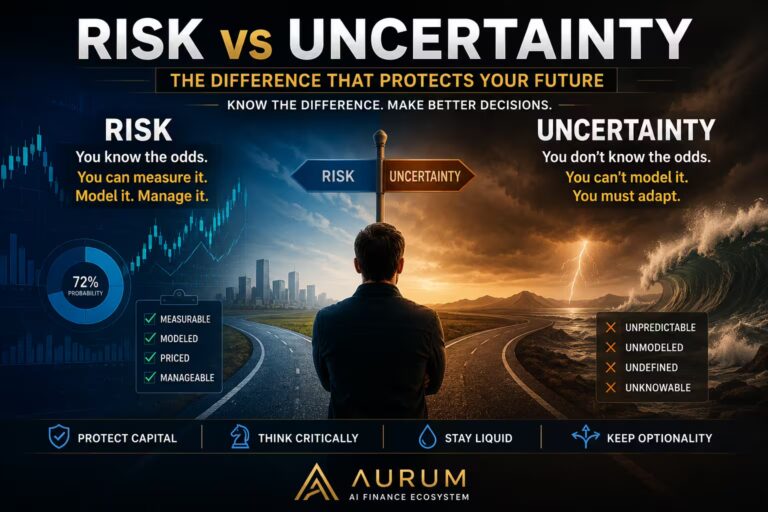
Capital does not like uncertainty.
Institutional capital especially does not like uncertainty.
Large players do not want to build in a market where the rules can change overnight, where access is unclear, where licensing is uncertain, and where one regulatory action can destroy a business model.
That does not mean institutions need everything to be easy.
It means they need enough clarity to make decisions.
This is why MiCA matters.
It may create compliance work.
It may create pressure.
It may force some products to change.
It may expose companies that were not ready.
But it also gives the industry a more defined structure.
And that structure can attract more serious builders and more serious capital over time.
MiCA Is Not the End of Crypto
A lot of people react to regulation emotionally.
They see a new framework and immediately assume it means the end of opportunity.
But that is not necessarily what is happening.
MiCA is not the end of crypto.
It may be the end of a certain kind of crypto.
The kind that relied on ambiguity.
The kind that avoided structure.
The kind that operated without a clear compliance path.
The kind that grew because no one was asking hard questions yet.
That era may be ending.
But the next era may be much more important.
The next era is about digital assets becoming part of serious financial infrastructure.
That means rules.
That means standards.
That means documentation.
That means compliance.
That means institutional conversations.
That means long-term thinking.
That may not be as exciting as hype, but it is far more important for sustainable growth.
Guardrails Do Not Stop Serious Builders
Another powerful idea from Bryan’s post was this:
Guardrails do not slow down serious builders. They clear the road of everyone who was not building anything real to begin with.
That is the kind of statement people should sit with.
Because in a noisy market, everyone can claim they are building.
Everyone can claim they have vision.
Everyone can claim they are early.
Everyone can claim they are disrupting finance.
But pressure reveals who is real.
Regulation reveals who has structure.
Compliance reveals who planned ahead.
Market shifts reveal who can adapt.
Serious builders may not love every rule, but they adjust.
They build around reality.
They do not disappear the moment the environment becomes harder.
That is why this message matters for the Aurum community.
What This Means for Aurum
Aurum is operating in the middle of a changing digital asset landscape.
The ecosystem touches AI-powered financial tools, digital assets, automation, Web3 infrastructure, RWA strategies, passive income potential, active income opportunity, and global financial technology.
That means regulation matters.
MiCA matters.
Market structure matters.
Compliance matters.
Institutional readiness matters.
Long-term infrastructure matters.
If the industry is moving from speculation into structure, then platforms connected to this space need to be evaluated differently.
It is not enough to ask:
What are the numbers today?
A better question is:
Is the ecosystem building for what comes next?
That is why Bryan’s perspective is important.
He is not framing regulation only as an obstacle.
He is framing it as part of the path toward a more serious industry.
Why This Is a Different Mindset
Many people in crypto still think like traders.
They want speed.
They want immediate results.
They want the next spike.
They want the next screenshot.
They want the next announcement.
Builders think differently.
Builders care about infrastructure.
They care about market access.
They care about regulatory pathways.
They care about product survival.
They care about whether the next wave of capital can actually enter the space.
That is the mindset difference.
Short-term participants fear every new rule.
Long-term builders ask how the rules shape the next opportunity.
This does not mean every regulation is good.
It does not mean every regulator is fair.
It does not mean compliance removes risk.
It does not mean every platform will survive.
But it does mean regulation should be understood, not ignored.
Why This Matters for Everyday Users
For regular users, this may sound like a big-picture industry conversation.
But it matters more than people realize.
Regulation affects platform access.
It affects products.
It affects withdrawals.
It affects stablecoins.
It affects compliance requirements.
It affects what companies can offer.
It affects who survives.
It affects whether serious capital enters the market.
So even if you are not a developer, lawyer, executive, or institution, you still need to understand the shift.
Because the platforms you use are affected by it.
The opportunities you evaluate are affected by it.
The risks you take are affected by it.
The future of digital asset income opportunities is affected by it.
This is why education matters.
The Bigger Lesson From Binance and Latin America
Bryan’s Binance experience adds credibility to the point because he is not speaking in theory.
He has seen markets develop.
He has seen regulatory uncertainty.
He has seen what happens when countries move early.
And his observation is worth remembering:
Markets that regulate early can become stronger than markets that stay stuck in uncertainty.
That does not mean regulation is always perfect.
It rarely is.
But a real market needs rules.
A real industry needs structure.
A real ecosystem needs enough clarity for companies, users, and capital to participate with confidence.
That is the bigger lesson.
Crypto does not need endless grey areas to succeed.
It needs enough clarity for serious builders to build.
Why Stop Chasing Now Covers This
At Stop Chasing Now, I do not only want to cover surface-level updates.
Yes, performance matters.
Yes, product updates matter.
Yes, income potential matters.
But the bigger picture matters too.
Regulation.
Infrastructure.
Market maturity.
Institutional readiness.
Digital asset adoption.
AI finance.
Web3 access.
Risk awareness.
Those are the topics that help people understand what is really happening.
Aurum provides the platform.
Stop Chasing Now helps people understand the process.
When someone joins through us, they get more than a registration link. They get onboarding support, setup guidance, wallet and funding explanations, educational resources, marketing support, AI follow-up tools, live chat and voice support, and help avoiding common beginner mistakes.
That kind of support matters because this industry is changing quickly.
The people who understand the shift will be in a much better position than those who only chase headlines.
Important Risk Reminder
This post is for educational purposes only.
Stop Chasing Now is not a financial advisor, investment advisor, tax advisor, legal advisor, or regulatory authority.
Aurum, AI-powered trading tools, digital assets, crypto platforms, Web3 wallets, stablecoins, regulatory transitions, and affiliate opportunities all involve risk.
Results are not guaranteed.
Past performance does not guarantee future results.
Regulation does not remove market risk, platform risk, technology risk, jurisdictional risk, compliance risk, or personal decision-making risk.
You are responsible for understanding the laws, rules, platform terms, and risks that apply to you.
Always do your own research.
Never use money you cannot afford to lose.
Final Thoughts
Bryan Benson’s point is worth paying attention to because it cuts through the noise.
Regulation creates pressure.
But pressure is not always bad.
Pressure exposes weak projects.
Pressure forces structure.
Pressure separates real builders from people who were only surviving in the grey areas.
MiCA may create challenges.
It may force changes.
It may cause some products to disappear.
But it may also help turn crypto into something institutions can actually build on.
That is the bigger story.
The industry is maturing.
The easy era is changing.
The grey-zone era is fading.
And the projects that treat regulation as infrastructure instead of only an obstacle may be the ones still standing when the next wave of capital arrives.